
Count the whole job, not just the appointment
A one-hour session is rarely one hour of work. Add preparation, travel, setting up, cleaning down, editing, notes and follow-up messages. Answering enquiries and running the business take time too, even though nobody books them.
Write down every step of delivering one booking and estimate how long each takes. Then time your first few real jobs. If you always spend an extra 30 minutes after an appointment, your price has to pay for it.
Split your costs into two kinds:
- Per-job costs happen every time you do the work: products, materials, travel, a room you hire by the hour.
- Running costs happen whether you’re busy or not: equipment, insurance, training, software, phone, rent.
Work out an hourly rate that actually pays you
Your hourly rate is not what you’d earn as an employee, because you aren’t paid for holidays, quiet weeks or admin. A simple way to set it:
- Decide what you want to earn in a year before tax.
- Add your yearly running costs.
- Work out your bookable hours: the hours a week you can realistically sell, times the weeks you’ll work.
- Divide the first two added together by the bookable hours.
Be honest about bookable hours. Most solo businesses can’t fill every slot, so plan around a realistic week, not your best one.
Allow for payment fees
Card payments cost money, so build the fees into your price rather than being surprised by them. On Shovva, the Free plan has no monthly fee and Shovva takes 10% of each sale. Pro is £15 a month with a 2% fee, and Premium is £29 a month with no Shovva fee. Stripe’s card fees apply on every plan.
Check what your customer is comparing
Look at services aimed at the same kind of customer near you and compare the whole offer: experience, location, length, products used, aftercare and what’s included. A price on its own tells you very little.
Ask why someone would choose you. A convenient time, a specialism, a quieter room or a clearly defined result are all reasons. Explain that value plainly, without promising results you can’t control.
If the price you need is more than your customers will pay, change the offer rather than discounting it. A shorter service, a small group session or a simpler version may work where a cheaper full service doesn’t.
Packages, deposits and add-ons
Once your main price works, three tools help you earn more from the same customers without raising it:
- Packages: a set of sessions bought together, such as five personal training sessions, paid up front. Regulars commit, and you know what’s coming.
- Deposits: part of the price paid when someone books, so a last-minute no-show doesn’t cost you the whole slot.
- Add-ons: small extras with their own price, such as a brow tint with a lamination or a travel fee outside your area.
On Shovva, you can take the full price, a percentage or a set amount as a deposit when someone books, once card payments are on, and set deadlines for cancelling or moving. See bookings and deposits, Shovva for barbers, salons and therapists and the Calloway Strength example for training packages.
Make the scope visible before someone books
Scope means the edges of the job: how long it lasts, what’s included, what the customer needs to bring or provide, and what costs extra. A photographer might include ten edited images and one location; a designer might include two rounds of changes.
Show the full price where you can, and explain anything that changes it before someone commits. A low headline price that only works after unavoidable extras loses trust quickly.
If every job depends on a brief, don’t force a fixed price. Ask for the details you need, then send a quote.
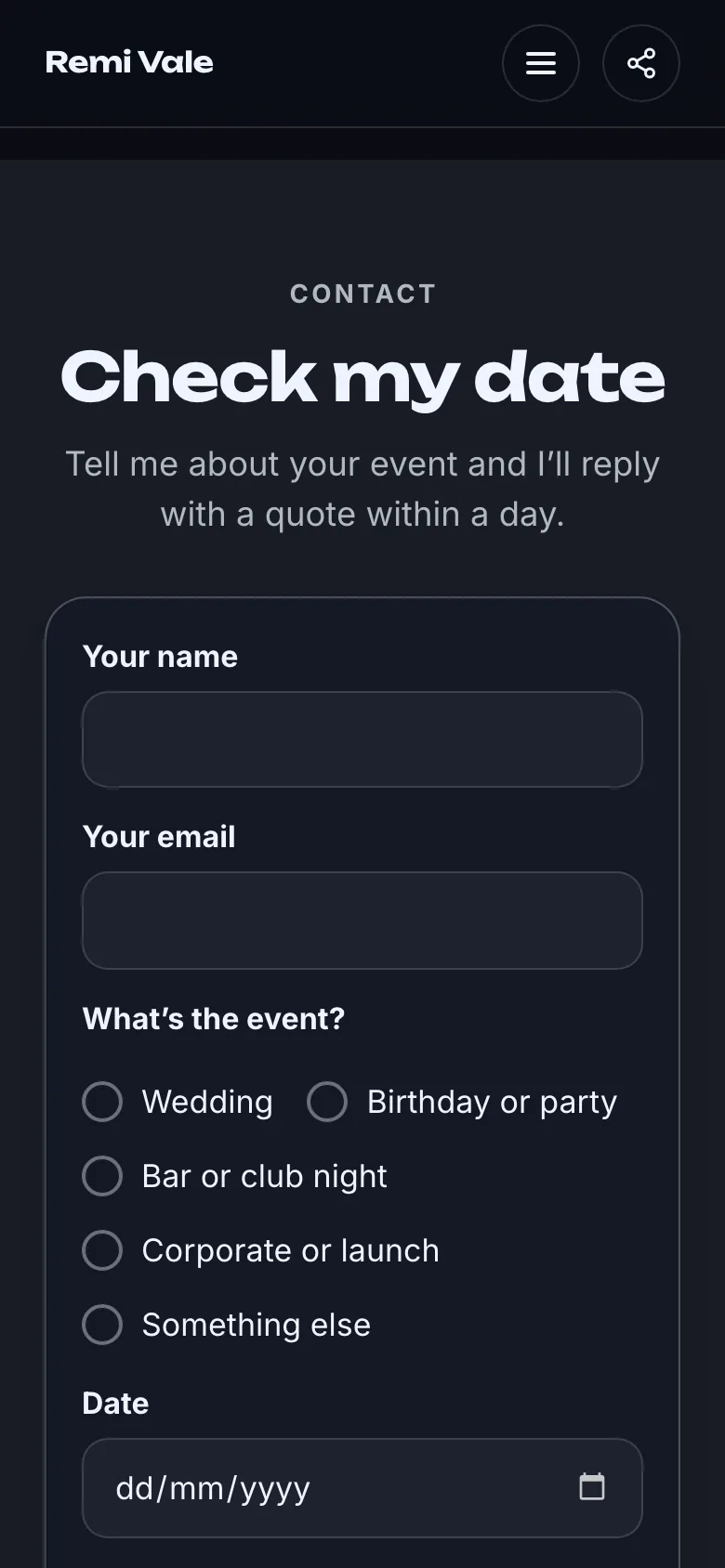
Customer view
Give a bespoke job a useful starting point.
Remi Vale, a DJ, asks what the event is and the date before quoting. When the price depends on the brief, ask for what you need to know first. See the Remi Vale example.
Actual Shovva screen. Fictional example business.
Review your prices, and raise them well
For every job in your first month, note what you charged, what it cost and how long it really took. If a full diary still leaves little after costs, look at the scope, the time and the price together.
When it’s time to raise prices:
- Give regulars notice, such as a month, and honour bookings already made.
- Change the price for new customers first if you’re nervous.
- Say what’s improved if something has (new products, more experience, longer appointments), but you don’t need to apologise for charging what the work costs.
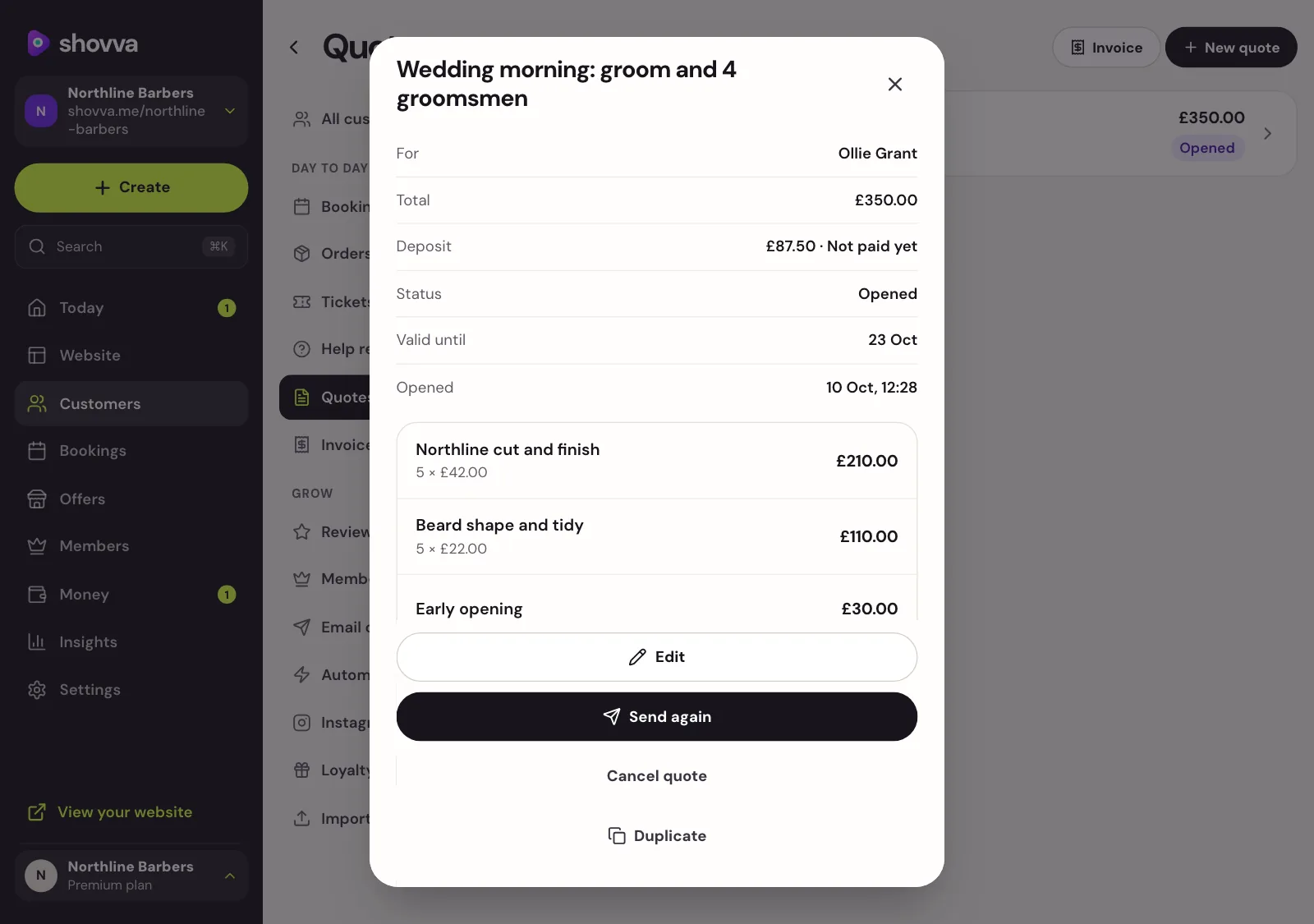
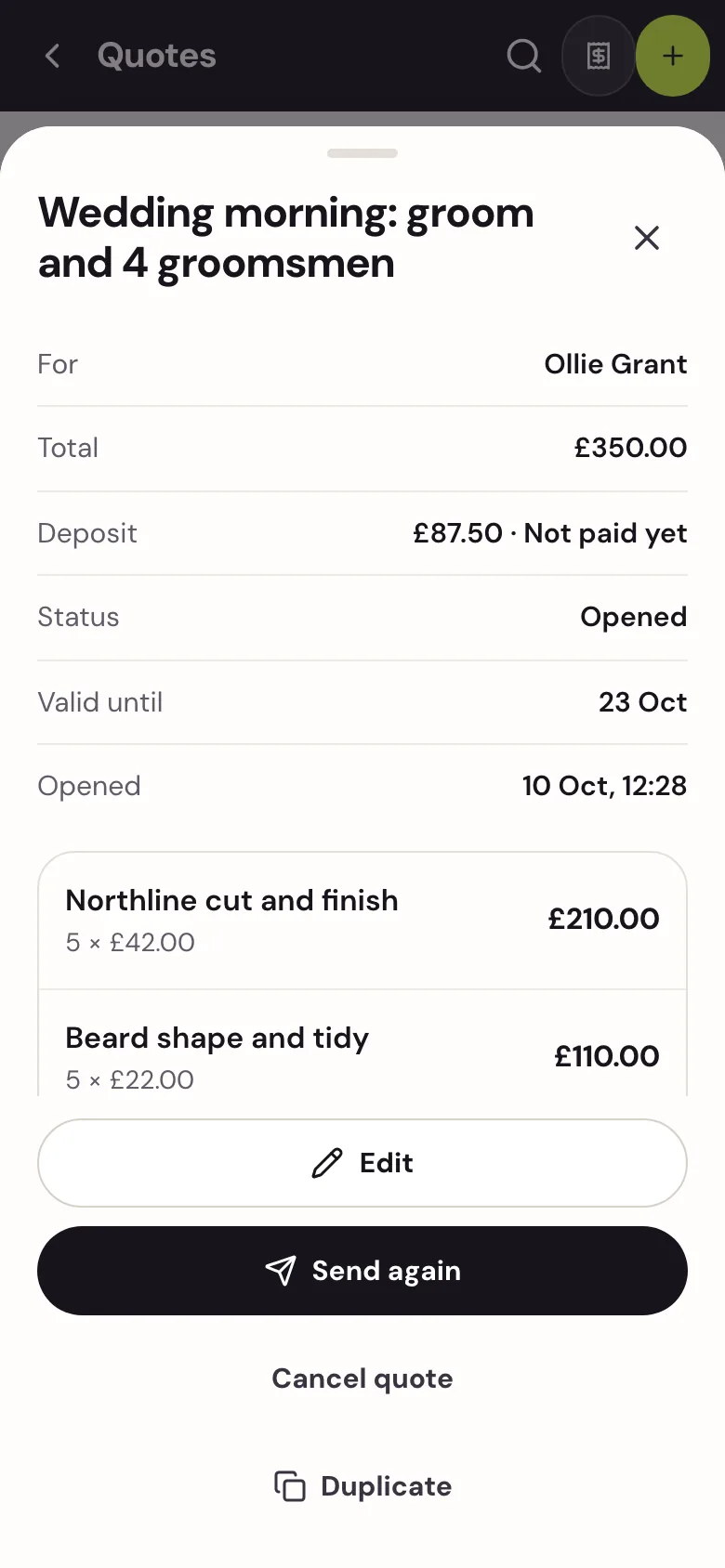
Owner dashboard
Turn the brief into a clear quote.
Northline Barbers’ quote for a wedding morning lists each service, the total, a 25% deposit and the date it’s valid until, and shows when the customer opened it. This is an example quote, not a payment already collected.
Actual Shovva screen. Fictional example business.
Questions people ask
Should I charge by the hour or by the job?
Customers usually prefer a price for the job, because they know what they’ll pay. Use your hourly rate behind the scenes to set that price, and only charge by the hour when the length of the work genuinely can’t be known in advance.
Should I show my prices on my website?
For set services, yes. A clear price answers the most common question before anyone has to message you. For custom work, show a starting price or what changes the price, and invite an enquiry.
How much deposit should I take?
Choose an amount that covers what a no-show would cost you, such as the products and part of your time, and say clearly whether it comes off the final price and when it can be refunded. Many businesses use a set amount for short services and a percentage for long or expensive ones.
Should I add card fees on top of my price?
It’s simpler to include them in your price, so the price people see is the price they pay. Rules on card surcharges differ by country, so check yours before adding a separate charge.
How often should I review my prices?
Look at them at least once a year, and whenever your costs change or you’re regularly fully booked weeks ahead. Being booked solid is often a sign your price is too low.