

Choose a small, specific audience first
“Everyone” is difficult to reach and difficult to write for. Start with a group whose needs you understand and whose attention you can realistically earn. A tutor could focus on adults returning to a subject. A photographer could offer portraits for independent local businesses.
Write down where those people already look for help: a local community, a professional group, a market, a venue or an existing network. Choose one or two places to begin. You do not need to maintain every social platform at once.
Listen before promoting. Look for recurring questions, timing concerns and words people use to describe the problem. These are useful clues for both your offer and your page.
Make your offer easy to repeat
Someone should be able to tell a friend what you do after reading a single sentence. Use this structure: “I help [person] with [specific need] through [clear offer].” Add the location or format when it matters.
For example: “Relaxed portrait sessions for independent businesses in Bristol, with five edited photos for your website and social pages.” This is an illustrative offer. It names the audience, format and deliverable without vague promises.
Put the same basic message on your profile, social introduction and any flyer or outreach you use. Consistency makes it easier to recognise that they lead to the same business.
Show evidence even when you are new
Use your own work, a clear demonstration or a sample project. Describe what the visitor is looking at and what you contributed. If it is a practice project, say so. If a photo shows a sample rather than a commissioned job, label it honestly.
You do not need invented testimonials or a claim that hundreds of people trust you. A helpful explanation, a relevant image and a clear process give someone concrete information to assess.
Once customers have experienced the work, you can ask for feedback and permission to share it. Keep the wording faithful to what they said.
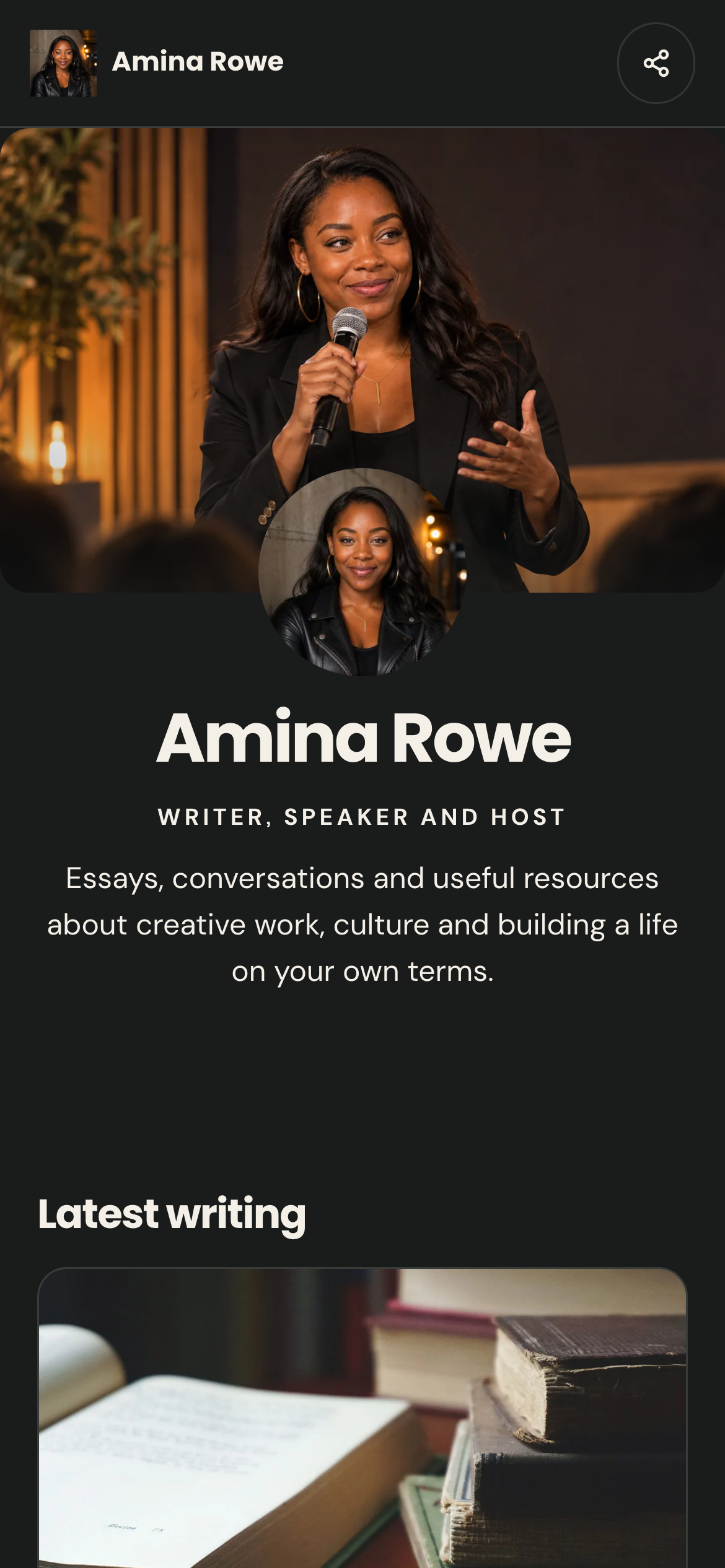
Amina’s example page combines a speaking photograph with a clear introduction. Use evidence that fits your work, then point an interested visitor towards the next step.
Actual Shovva screen. Fictional example business.
Start conversations with context
Share a useful answer or an example where your audience already spends time, following the community’s rules. Explain who your offer suits and link to a page that answers the next questions. Avoid dropping the same sales message everywhere.
If someone has asked for recommendations, a brief relevant introduction is more useful than a generic pitch. Ask existing contacts for introductions where appropriate; make it easy for them to understand who you can help.
A simple message could be: “I’m opening a few beginner pottery sessions this month. They’re for people who have never worked with clay, and materials are included. Here are the dates and details.” Only claim a limited number of spaces when that is true.
Give interest somewhere clear to go
An interested person should not need to search through old posts to find your prices, location or booking details. Use one page with your offer, useful photos, common questions and a clear action.
On Shovva, match the action to the work: booking a service, buying a product or ticket, or sending a project enquiry. Keep a path to contact you if someone needs an answer before deciding.
Test your shared link on a phone. Check that the first screen explains what you do and that the button leads to the intended offer. Share the live page rather than an editor or preview link.
Measure conversations, not just attention
Keep a short weekly record: where you shared the offer, useful conversations, enquiries, paid work and recurring questions. Ask new customers how they found you when it is appropriate. Likes alone do not tell you whether an offer is working.
If people visit but ask the same basic question, improve the page. If they enquire but do not buy, review the fit, scope and price. If nobody relevant sees it, work on distribution before rebuilding the whole business.
Your first-week experiment: pick one audience, publish one clear offer, share two useful pieces of work and record what people ask. Use those answers to improve the next week.

The leads view keeps enquiries and their status visible. A useful conversation is easier to act on when you can see where it stands.
Actual Shovva screen. Fictional example business.