
Choose a small, specific audience first
“Everyone” is hard to reach and hard to write for. Start with a group whose needs you understand and whose attention you can realistically earn. A tutor could focus on adults going back to a subject. A photographer could offer portraits for independent local businesses.
Write down where those people already look for help: a local Facebook group, a parents’ WhatsApp, a gym, a market, a venue, a professional network. Pick one or two places to start. You don’t need to keep up every social platform at once.
Listen before you promote. Look for questions people ask again and again, the times that suit them and the words they use. Those are clues for your offer and your website.
Make your offer easy to repeat
Someone should be able to tell a friend what you do after reading one sentence. Try: “I help [person] with [specific need] through [clear offer].” Add the place or format when it matters.
For example: “Relaxed portrait sessions for independent businesses in Bristol, with five edited photos for your website and social media.” It names who it’s for, what it is and what they get, without vague promises.
Use the same message on your website, your social bio and anything you hand out. When everything says the same thing, people recognise you.
Start with people who already know you
Your first customers usually come from people one or two steps away from you: friends, past colleagues, neighbours, the people at your gym or your child’s school. They already trust you, and they know people who need what you do.
- Send a short, personal message to twenty people you know, saying what you’re starting and who it’s for. Ask them to pass it on rather than to buy.
- Offer your first few customers an introductory price, such as a shorter first session, and ask for honest feedback afterwards. Say clearly it’s an introductory price, and never make a discount depend on leaving a review.
- Tell every happy customer that recommendations are how you grow, and make it easy: one link they can forward.
Show evidence, even when you’re new
Use your own work, a demonstration or a sample project. Say what the visitor is looking at and what you did. If it was practice work, say so. If a photo shows a sample rather than a paid job, label it honestly.
You don’t need invented testimonials or claims that hundreds of people trust you. A helpful explanation, a relevant photo and a clear process give people something real to judge.
Once customers have experienced the work, ask for feedback and permission to share it, and keep their words as they said them. On Shovva, you can ask customers for reviews after a booking and choose which ones show on your website.
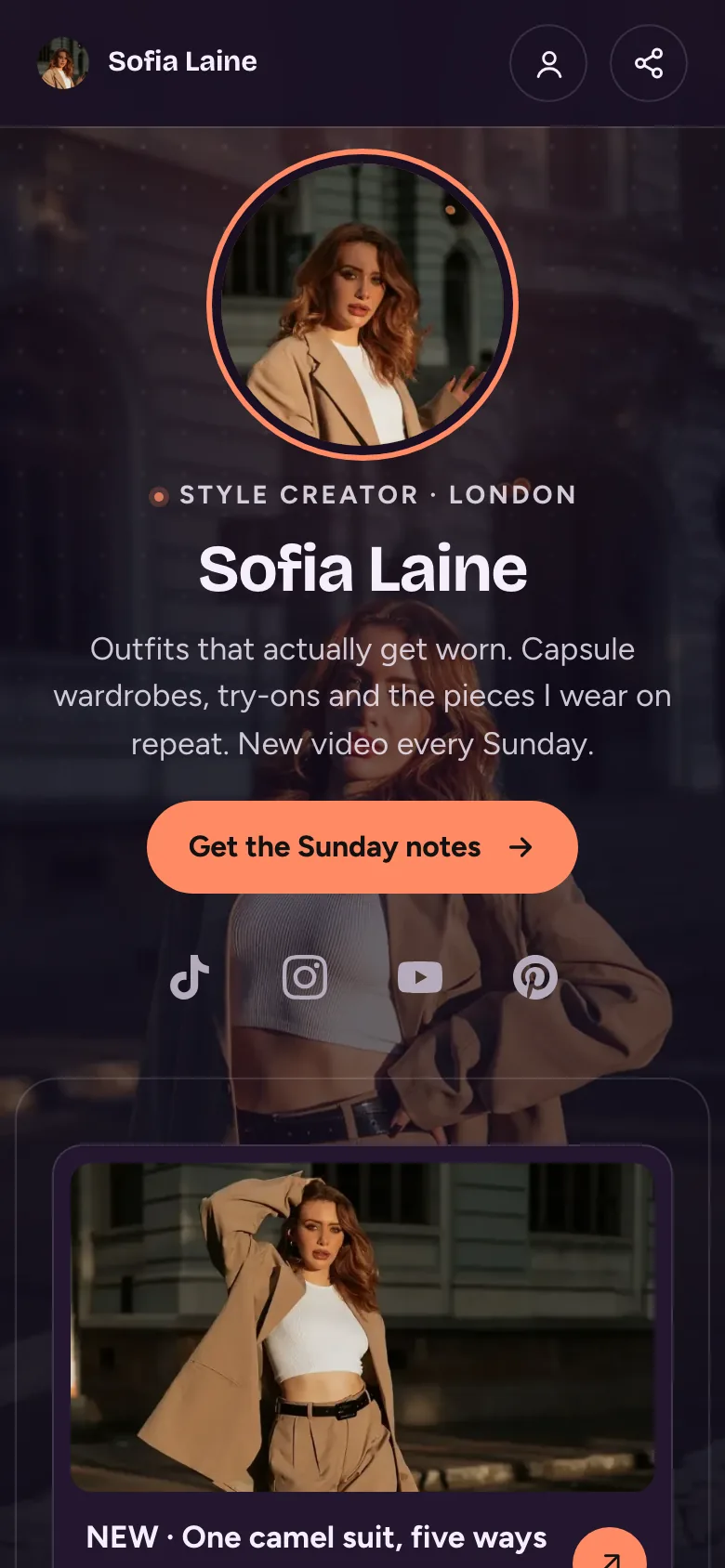
Customer view
Make your work recognisable.
Sofia’s example website opens with a strong photo of her work and a clear introduction. Use evidence that fits your work, then point an interested visitor towards the next step.
Actual Shovva screen. Fictional example business.
Get found locally, for free
If customers come to you or you go to them, a free Google Business Profile helps you show up when people search for your trade nearby. Google lets you hide your home address and show a service area instead if you travel to customers and don’t serve them where you live. Add your website link, your hours and real photos, and ask happy customers to leave a Google review.
Put your link on everything physical too: a card at the till, a sticker on your van, a QR code on your counter. On Shovva, your website has a QR code and share link ready to print.
Start conversations with context
Share a useful answer or an example where your audience already spends time, and follow each community’s rules. Say who your offer suits and link to a page that answers the next questions. Don’t paste the same sales message everywhere.
If someone asks for a recommendation, a short, relevant reply is more useful than a pitch. A simple post could be: “I’m opening a few beginner pottery sessions this month. They’re for people who’ve never worked with clay, and materials are included. Dates and details here.” Only say spaces are limited when they really are.
Short videos of the work itself, such as a before and after, a time-lapse or a day in the studio, are a simple way to be seen by people who don’t follow you yet. Post the same idea natively on each platform rather than pasting one file everywhere.
Give interest somewhere clear to go
An interested person shouldn’t have to scroll through old posts to find your prices, location or how to book. Use one page with your offer, useful photos, common questions and a clear action.
On Shovva, match the action to the work: booking a service or class, buying a product or ticket, joining a membership or sending an enquiry. For people who aren’t ready yet, a sign-up section lets them join your list, so you can tell them when you have new dates.
Your Shovva website works as your link in bio, so put that one link in your Instagram, TikTok and other profiles. If you use Linktree now, paste your address and Shovva copies your name, bio, photo and links across. See link in bio on Shovva and our guide to a link in bio that gets bookings.
Test the link on a phone. Check that the first screen explains what you do and the button leads to the right offer.
Measure conversations, not likes
Keep a short weekly note: where you shared your offer, useful conversations, enquiries, paid work and repeated questions. Ask new customers how they found you. Likes alone don’t tell you whether an offer is working.
If people visit but ask the same basic question, improve the website. If they enquire but don’t buy, look at the fit, the scope and the price. If nobody relevant sees it, work on where you share it before changing the whole business.
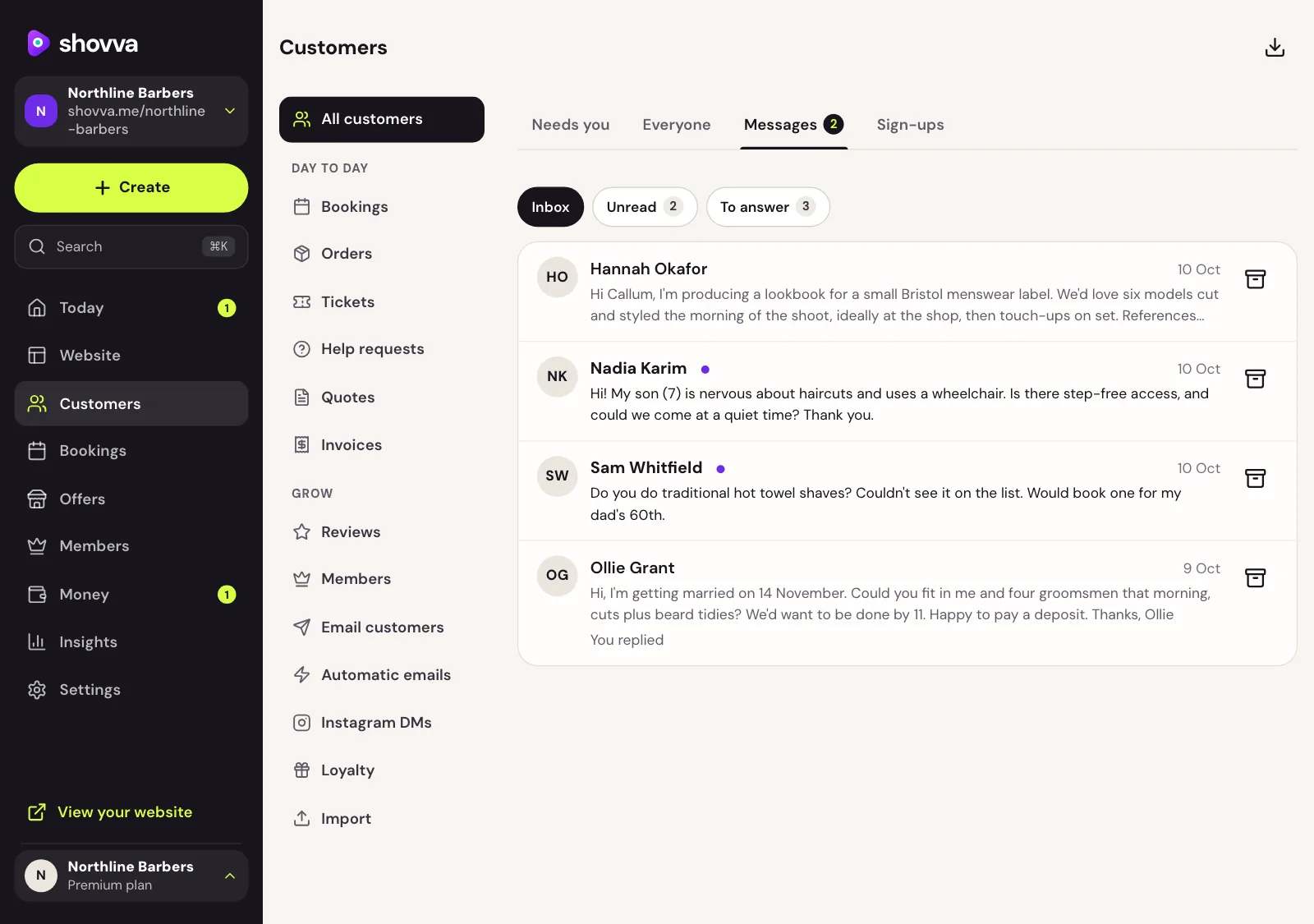
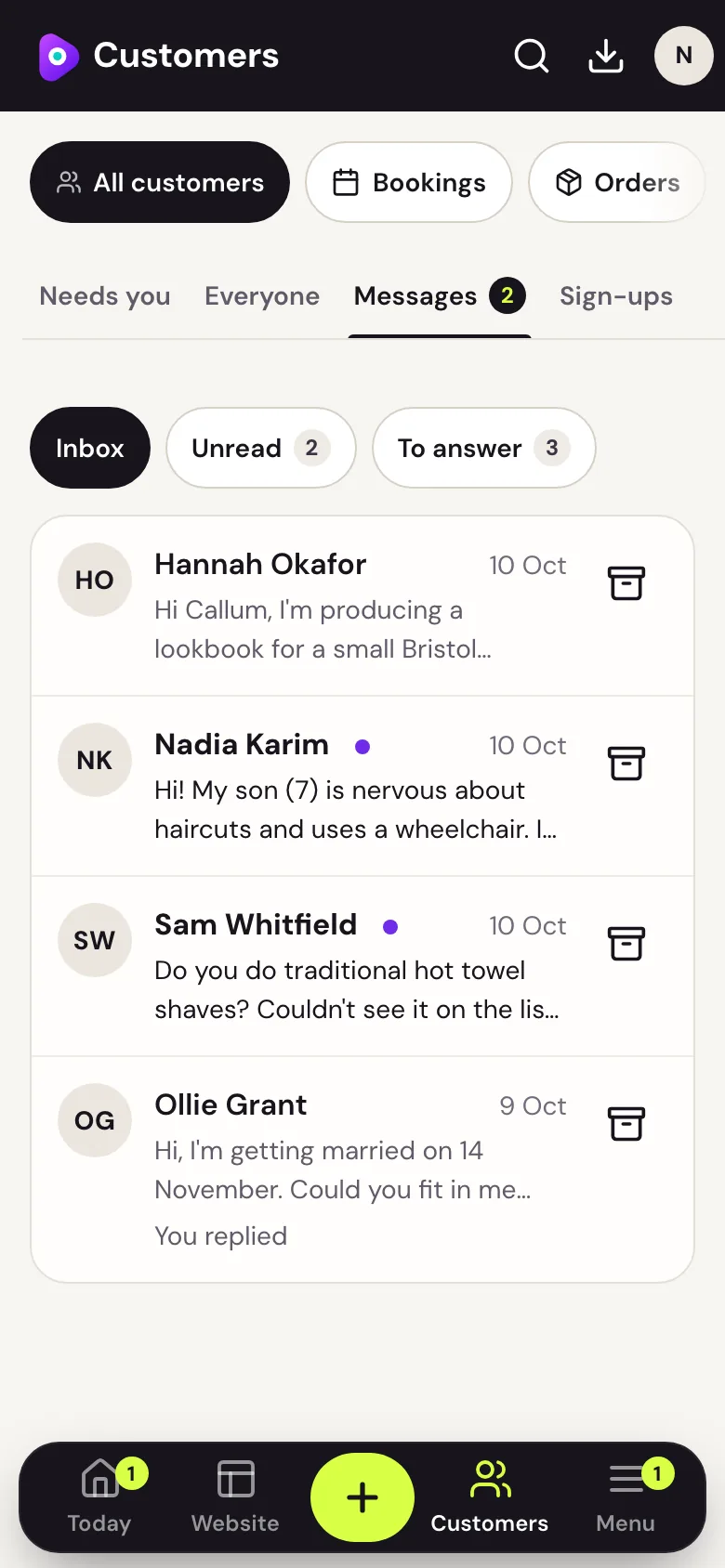
Owner dashboard
Follow up on the interest you earn.
Enquiries from your website land in Messages, with unread ones marked and the ones still to answer counted. A conversation is easier to act on when you can see where it stands.
Actual Shovva screen. Fictional example business.
Questions people ask
How do I get customers with no followers?
Start with people who already know you, then go where your customers already gather, such as local groups, venues or communities for your trade. A free Google Business Profile helps local customers find you through search, and one clear link makes it easy for anyone you meet to book.
Should I offer my services for free to get started?
A small number of introductory sessions at a lower price can get you feedback, photos and reviews. Working for nothing for long tends to attract people who won’t pay later, so keep it short and say clearly that it’s an introductory offer.
Which social media platform is best for a small business?
The one your customers already use, where you can post consistently. For visual trades such as beauty, food, crafts and fitness, Instagram and TikTok are common starting points. Pick one, post regularly and send every post to the same link.
How do I ask for referrals without being awkward?
Ask right after a job has gone well, keep it simple (“If you know anyone who’d like this, I’d really appreciate you passing my link on”) and give them a link that’s easy to forward.