

Start with a recurring need
A membership asks someone to make an ongoing commitment. Give them a clear reason the value continues after the first payment. That might be a regular workshop, new resources, structured feedback or access to a programme.
Write down the problem that returns each month and the specific help you will provide. A large list of vaguely described benefits is harder to deliver and harder for customers to assess.
Speak to people in the intended audience before launching. Ask which part they would use regularly and what would make the commitment difficult. Their answers may suggest a one-off offer is a better starting point.
Plan a delivery schedule you can sustain
Map the first few delivery cycles. Include preparation, the benefit itself, customer questions and any administration. Leave space for interruptions rather than planning around your most productive week.
An illustrative starter membership could include one monthly group workshop and a supporting resource. State whether recordings are available, how long resources remain accessible and whether individual support is included. Only offer features you can actually provide.
Set a sensible capacity if your time is part of the benefit. Ten people asking for personal feedback creates a different workload from ten people downloading the same worksheet.
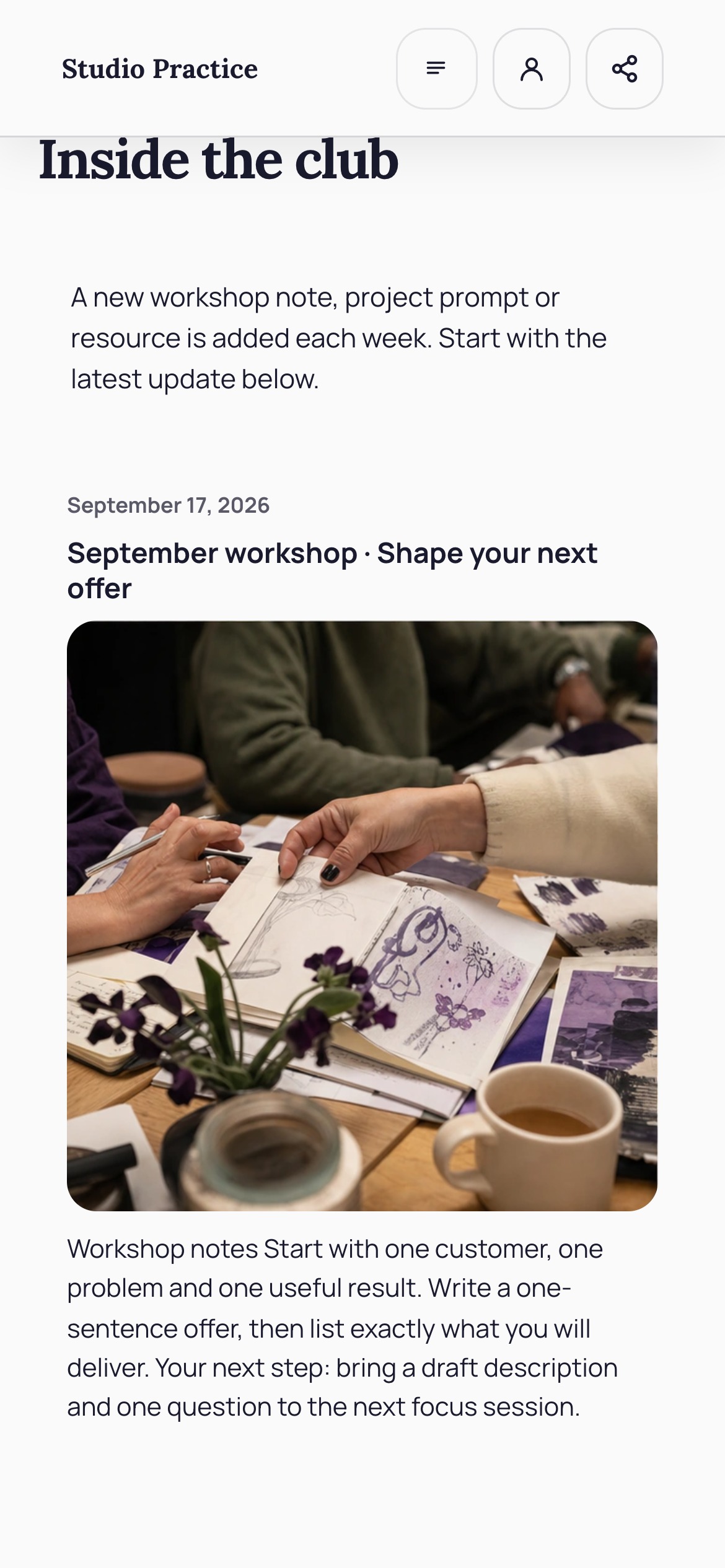
Here, members get a dated workshop update with practical notes. Publish your own member-only updates and resources, following the delivery rhythm you promise.
Actual Shovva screen. Fictional example business.
Explain the price and commitment in plain language
State what the member receives, how often they are charged and when the benefits are delivered. Explain whether there is a minimum term, what happens on cancellation and how access is affected. Keep these details consistent with the membership you configure.
Avoid implying that recurring revenue is guaranteed or passive. Members may leave, payments may fail and delivery still requires work. Work out the time and costs before choosing a price.
If you use different tiers, make the differences meaningful and easy to compare. For a first launch, one understandable membership is often easier to run than several overlapping options.
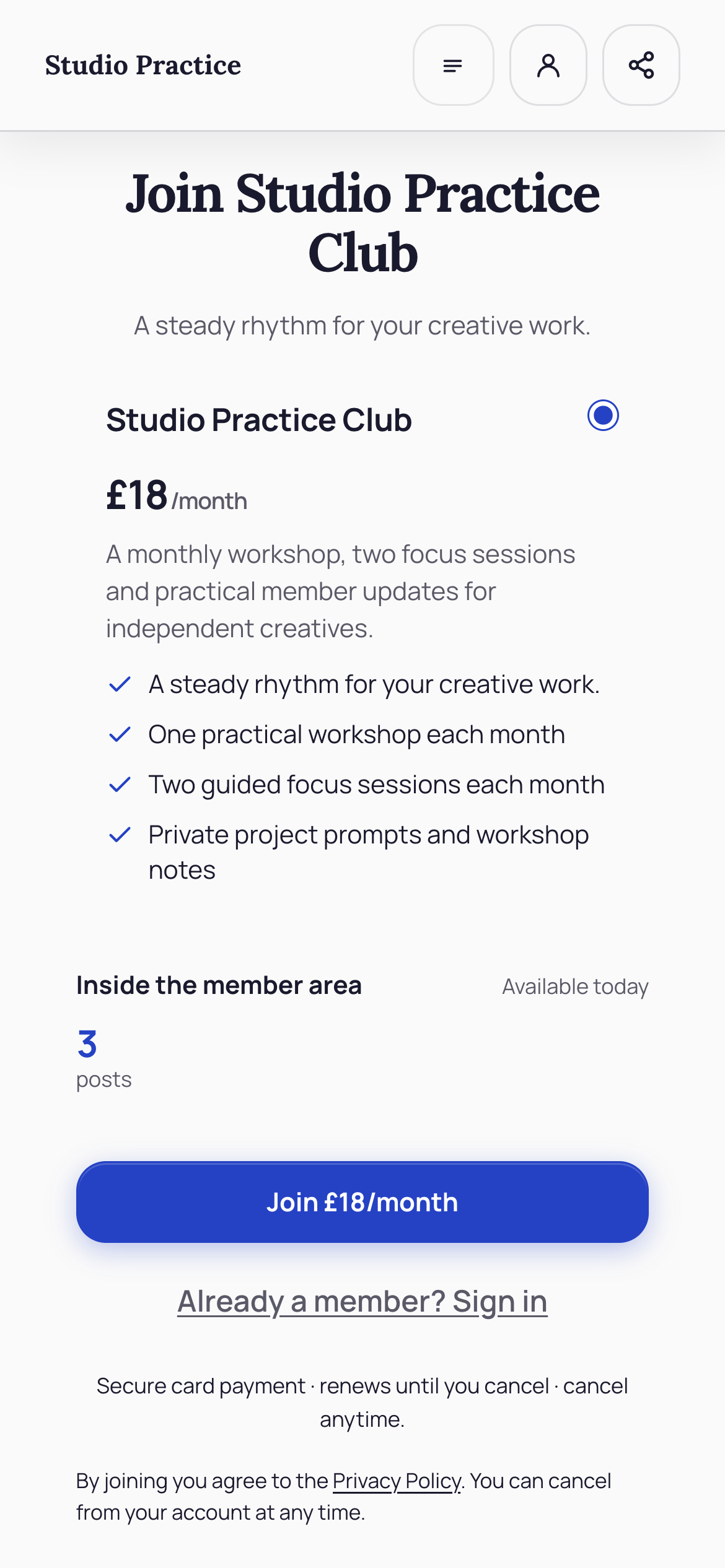
The example plan is £18 per month, with the included benefits listed together. Your price, payment frequency and description should all tell the same story.
Actual Shovva screen. Fictional example business.
Set up access and check the journey
In Shovva, create the membership offer and review the relevant customer and access settings. Complete the required payment setup for a paid offer. Check what the customer sees when joining and how you will deliver the promised benefits.
If any part happens through an external service, say so and explain how a member gets access. Do not describe Shovva as hosting a community or live session unless that is the actual setup you have chosen.
Check the member-management view in your dashboard and understand the statuses you will use. Have a clear route for questions about access, billing or leaving the membership.
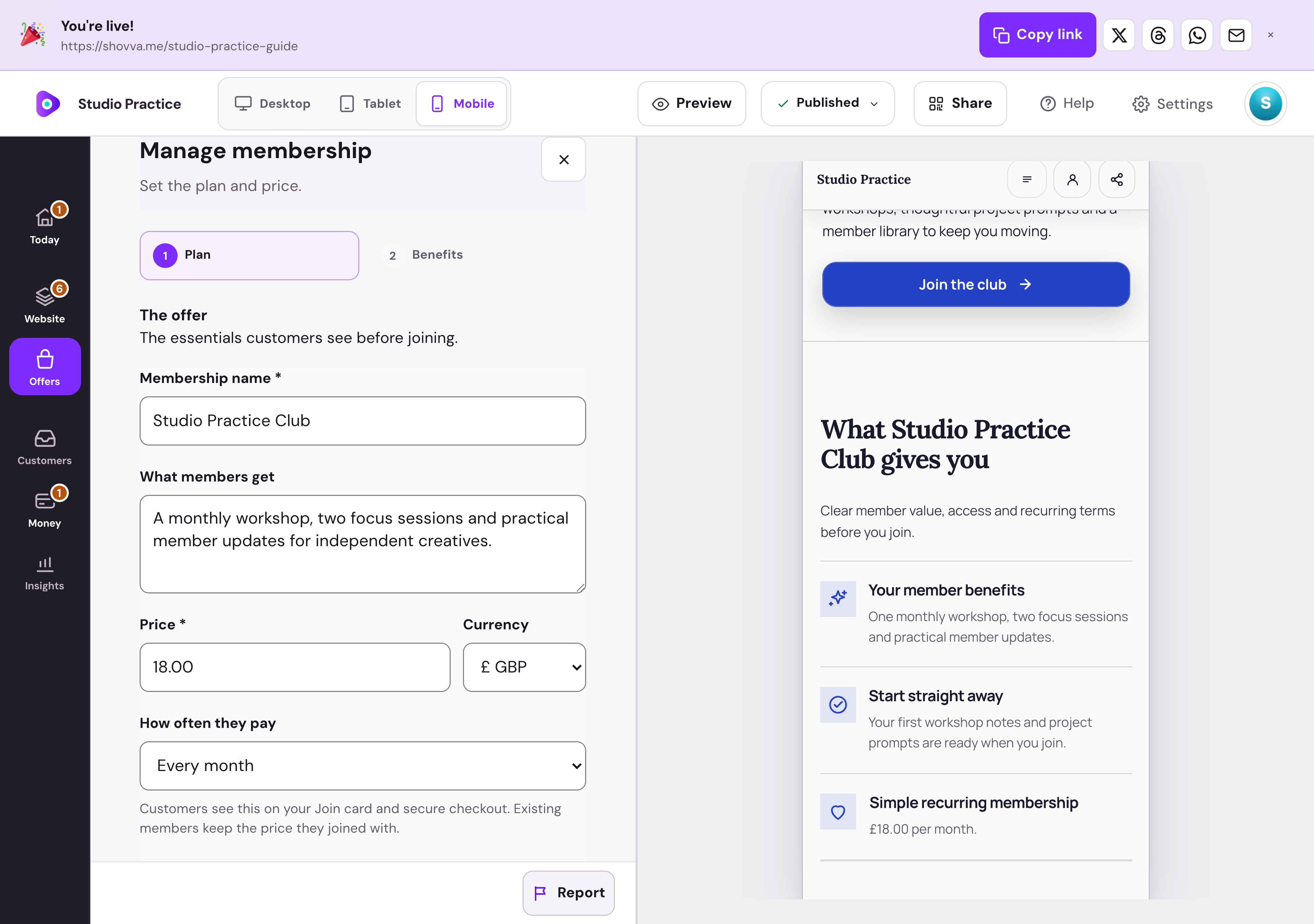
Choose the membership name, description, price and billing frequency in Shovva. Check the customer preview before saving changes to your offer.
Actual Shovva screen. Fictional example business.
Welcome members and review what they use
Your first welcome should tell someone where to begin, when the next benefit arrives and how to ask for help. Keep the instructions short enough to follow without searching through several messages.
After each delivery cycle, note what members used, where they needed help and whether you met the promised schedule. Ask focused questions such as “Which part was most useful?” and “What was difficult to access?”
Use that feedback to improve the core offer before adding more benefits. Communicate changes clearly and respect the commitments already made to members.
Before launch: a recurring need, realistic schedule, clear price, working access route, understandable cancellation information and a support plan.